Key Takeaway: Vehicle Wrap CostThe cost of a professional vehicle wrap depends on more than vehicle size. Material square footage matters, but installation labor, vehicle complexity, film quality, installer experience, warranty coverage, and long-term durability all affect the true value of the finished wrap. |
Why Does One Vehicle Wrap Cost More Than Another?
One of the most common questions we hear is, “Why does it cost so much to wrap my car when it’s so much smaller than that box truck you just finished?”
It’s a fair question, and the answer comes down to understanding what drives the cost of a professional vehicle wrap. While material is certainly part of the equation, installation labor is often the biggest factor.
At first glance, a 26-foot box truck looks like an enormous project. It can easily have more than 500 square feet of printable surface. A personal vehicle, by comparison, may only require around 200 square feet of vinyl. Because of that, many people assume the truck should require two or three times as much labor.
Surprisingly, that’s often not the case.
Vehicle Size Affects Material Cost
Fleet vehicles such as box trucks are generally made up of large, flat panels with relatively few obstacles. Those long, uninterrupted surfaces allow experienced installers to work efficiently, applying large sections of vinyl with minimal stretching or trimming.
Although there is more material involved, the installation process itself is often more straightforward.
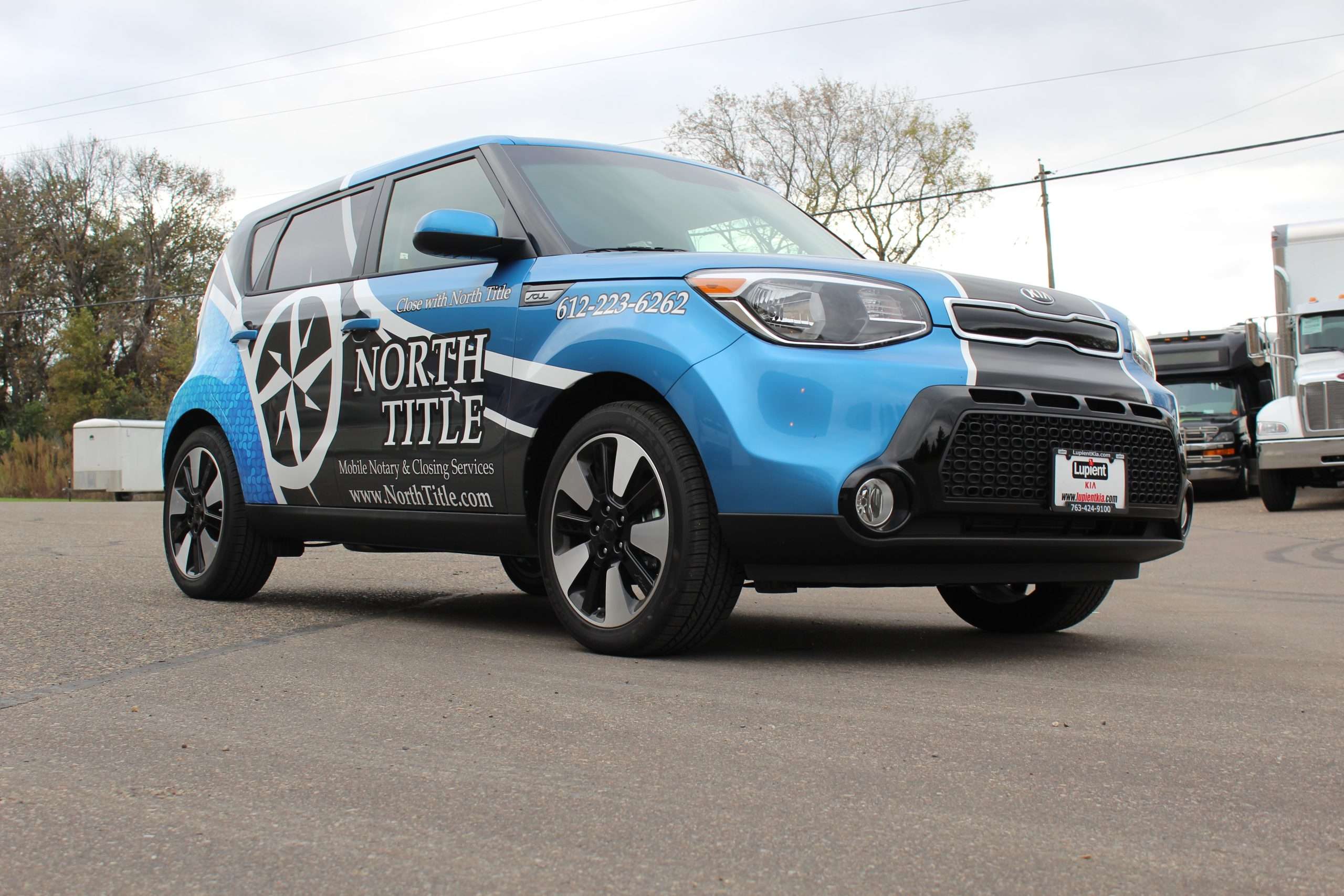
Passenger vehicles are different. They are designed with style in mind rather than installation simplicity. Curved body panels, recessed door handles, mirrors, bumpers, spoilers, complex body lines, and deep channels all require careful stretching, heating, trimming, and finishing.
Every one of those details adds time to the installation.
Vehicle Complexity Drives Installation Labor
A full color change wrap on a personal vehicle can require significantly more labor than many commercial fleet graphics, even though it uses considerably less material.
Every panel demands precision because the wrap is not simply displaying graphics. It is becoming the new visible paint color of the vehicle.
Installers must hide seams, wrap edges further around body panels, maintain consistent grain direction on specialty films, and make every exposed surface look factory finished. It is meticulous work, and experience matters.
That is why vehicle size and vehicle wrap cost do not always move in a straight line. Larger vehicles often use more material, but smaller vehicles with complex curves, trim, and finish expectations can require far more installation time.
Material Quality Changes the Long-Term Value
Material costs still play an important role. Larger vehicles consume more vinyl and laminate, so their total price often ends up being higher. More square footage means more printed media, more overlaminate, more ink, and more production time.
In other words, vehicle size primarily affects material costs, while vehicle complexity drives installation labor.
Another factor customers do not always see is the quality of the material being installed. There is a significant difference between economy films and premium wrap products.
Lower-cost calendared films may save money upfront, but they typically have a shorter lifespan, often around two to three years in outdoor conditions. They require more heat to conform to curves, tend to shrink over time, and are more likely to lift around edges, rivets, and recessed channels.
Even some lower-cost cast films use adhesives that make installation more difficult and less forgiving, increasing labor while often producing a less refined finished product.
Why TG Wraps Uses Premium Materials
At Transport Graphics, we choose premium materials because they provide better results for our customers over the long term. As a 3M Certified Installer and 3M MCS Warranty Certified shop, we use high-performance cast wrap films paired with premium UV gloss overlaminates designed for maximum durability.
A properly manufactured and installed 3M MCS-certified wrap can deliver more than seven years of outdoor performance in many applications and is often backed by an industry-leading warranty.
These films conform more easily, remain stable over time, resist shrinking, and can typically be removed with far less adhesive residue when it is eventually time for a new look.
Look Beyond the Bottom-Line Price
When comparing wrap quotes, it is important to look beyond the bottom-line price. The quality of the materials, the experience of the installers, the warranty behind the finished product, and the expected lifespan all contribute to the true value of a wrap.
A professionally installed wrap using premium materials may cost more initially. But when it lasts years longer, maintains its appearance, and removes quicker and cleaner, it often becomes the more economical choice over the life of the vehicle.
If you are comparing vehicle wrap options and want a clear explanation of materials, installation, durability, and long-term value, contact TG Wraps to talk through your project.